

CEDAR represents an opportunity for British Columbia to help shape the future of environmental genomics globally.
A central component of PODS is CEDAR, a proposed collaborative hub focused on advancing environmental DNA (eDNA) science, standards, and applied innovation.
Our Approach
With CEDAR, we are building a collaborative centre of excellence in eDNA biodiversity monitoring that will encompass an immersive full life-cycle training, and a retreat-style space for dialogue to advance the field.
CEDAR will bring together subject matter experts, end-users, and students to learn, share, and advance eDNA technology for use in biodiversity research, conservation, and management.

Located in ḵalpilin (Pender Harbour, BC) at the northern end of the Salish Sea, CEDAR will be housed in the future home of the Pacific Ocean Discover Station (PODS) and is a partnership with the shíshálh Nation and Capilano University.
Frequently Asked Questions
-
CEDAR, the Centre for Excellence in eDNA Analysis and Research is a collaborative hub focused on advancing environmental DNA (eDNA) science, standards, and applied innovation. CEDAR is envisioned as a western Canadian centre where academic researchers, Indigenous knowledge keepers, government scientists, environmental practitioners, and industry partners can work together to address critical challenges facing the rapidly growing field of environmental genomics.
-
Environmental DNA (eDNA) is genetic material that organisms naturally leave behind in their environment through skin cells, mucus, scales, feces, urine, gametes, or decomposing tissue. Rather than capturing or directly observing organisms, scientists can collect samples of water, soil, sediment, or air and analyze the DNA they contain to determine which species are or have recently been present.
-
Environmental DNA has transformed biodiversity monitoring by allowing scientists to identify species from traces of genetic material left in the environment. Through a workflow that includes environmental sampling, DNA extraction, amplification, sequencing, and bioinformatic analysis, eDNA provides a fast, sensitive, and scalable approach for assessing biodiversity. Today, it is widely used to support conservation planning, ecosystem restoration, invasive species management, fisheries monitoring, and long-term environmental stewardship.
Knowing what organisms are in a specific area and how that changes over time is central to understanding how our world or specific area is changing. Changes maybe be localized like habitat destruction or loss from human-induced or natural events or global in scale due to climate change. eDNA technology is not only a very powerful tool to quickly and efficiently know which organisms are present in a given time and place but can be repeated year-over-year to observe changes in the system. Done across large spatial and temporal scales, eDNA can inform on the impacts of larger climactic changes and how it impacts species and biodiversity. Not only does this improve our understanding but can also help inform management or conservation decisions.
eDNA sampling is non-invasive – you merely need to sample the water, soil, or air to collect the genetic material that will inform on the suite of organisms within or passing through a given system. This is an important consideration for systems that include sensitive or ETP (endangered, threatened or protected) species.
-
eDNA has become a powerful tool for biodiversity monitoring because it enables researchers to detect a wide range of species quickly, accurately, and non-invasively. It is used to:
· Measure species richness and overall biodiversity.
· Detect rare, cryptic, or endangered species that are difficult to observe.
· Identify invasive species before populations become established.
· Monitor changes in ecosystems over time.
· Assess the effectiveness of conservation and restoration efforts.
· Compare biodiversity across locations and seasons.
· Support ecosystem management and environmental impact assessments.
Because a single environmental sample can contain DNA from hundreds of organisms, eDNA allows researchers to survey entire biological communities with significantly less effort than many traditional field methods.
-
The eDNA Workflow
The complete eDNA process consists of several key steps:
1. Study Design
Researchers define the monitoring objectives, target species or communities, sampling locations, timing, and replication strategy.
2. Field Sampling
Water, soil, sediment, or air samples are collected using sterile techniques to minimize contamination.
For aquatic studies, water is the most common sample type.
3. Filtration and Preservation
Water samples are passed through fine filters that capture DNA fragments.
Filters are preserved using specialized buffers or freezing to prevent DNA degradation during transport.
4. DNA Extraction
DNA is isolated from the filters or environmental material using laboratory extraction methods that remove contaminants while preserving genetic material.
5. PCR Amplification
Specific regions of DNA are amplified using the Polymerase Chain Reaction (PCR).
Researchers may use:
Species-specific assays to detect one species.
Metabarcoding primers that amplify DNA from many species simultaneously.
6. DNA Sequencing
Amplified DNA is sequenced using high-throughput sequencing technologies, generating millions of DNA reads from a single sample.
7. Bioinformatics Analysis
Raw sequence data are quality filtered.
DNA sequences are compared against reference databases to identify the species present.
The resulting data are organized into species lists and measures of biodiversity.
8. Ecological Interpretation
Scientists analyze the species data to evaluate biodiversity patterns, detect changes over time, identify ecological indicators, and inform conservation or management decisions.
-
Compared with traditional survey methods, eDNA offers several important benefits:
· Non-invasive and causes minimal disturbance to wildlife.
· Highly sensitive, capable of detecting species present at very low abundance.
· Cost-effective for monitoring large areas.
· Rapid collection of biodiversity data.
· Standardized and repeatable sampling methods.
· Effective in environments where visual surveys are difficult.
CEDAR Expert Advisors
Caren Helbing, Ph.D.
Professor
Head, Applied Ecotoxicogenomics and Biomolecule Innovation Laboratory (AEBIL)
School of Molecular Life Sciences, University of Victoria
Warren Cardinal-McTeague, Ph.D.
Assistant Professor
Canada Research Chair in Indigenous Peoples, Governance and Environmental Relations
Department of Forest and Conservation Sciences, University of British Columbia
Cathryn Abbott, Ph.D.
Research Scientist
Fisheries and Oceans Canada
Matthew Lemay, Ph.D.
Research Scientist
Hakai Institute
Emily Rubidge, PhD
Research Scientist
Seascape Ecology and Conservation Program
Fisheries and Oceans Canada
Jennifer Sunday, Ph.D.
Associate Professor
Canada Research Chair, Global Change Biology
Department of Biology, McGill University
Affiliate Associate Professor, Department of Zoology, University of British Columbia
Erin DeBruin, PhD.
Manager, Professional Education and Implementation
GenomeBC
“The Sunshine Coast is defined by its connection to the ocean, and protecting our marine environment depends on strong science, innovation, and collaboration. CEDAR represents an important opportunity to build local research capacity while bringing together researchers, Indigenous partners, governments, and environmental organizations to advance new tools for understanding and protecting marine ecosystems. I look forward to seeing this initiative grow and the contributions it can make to conservation and environmental stewardship here on the Sunshine Coast and beyond.”
— Patrick Weiler, Member of Parliament for West Vancouver–Sunshine Coast–Sea to Sky Country
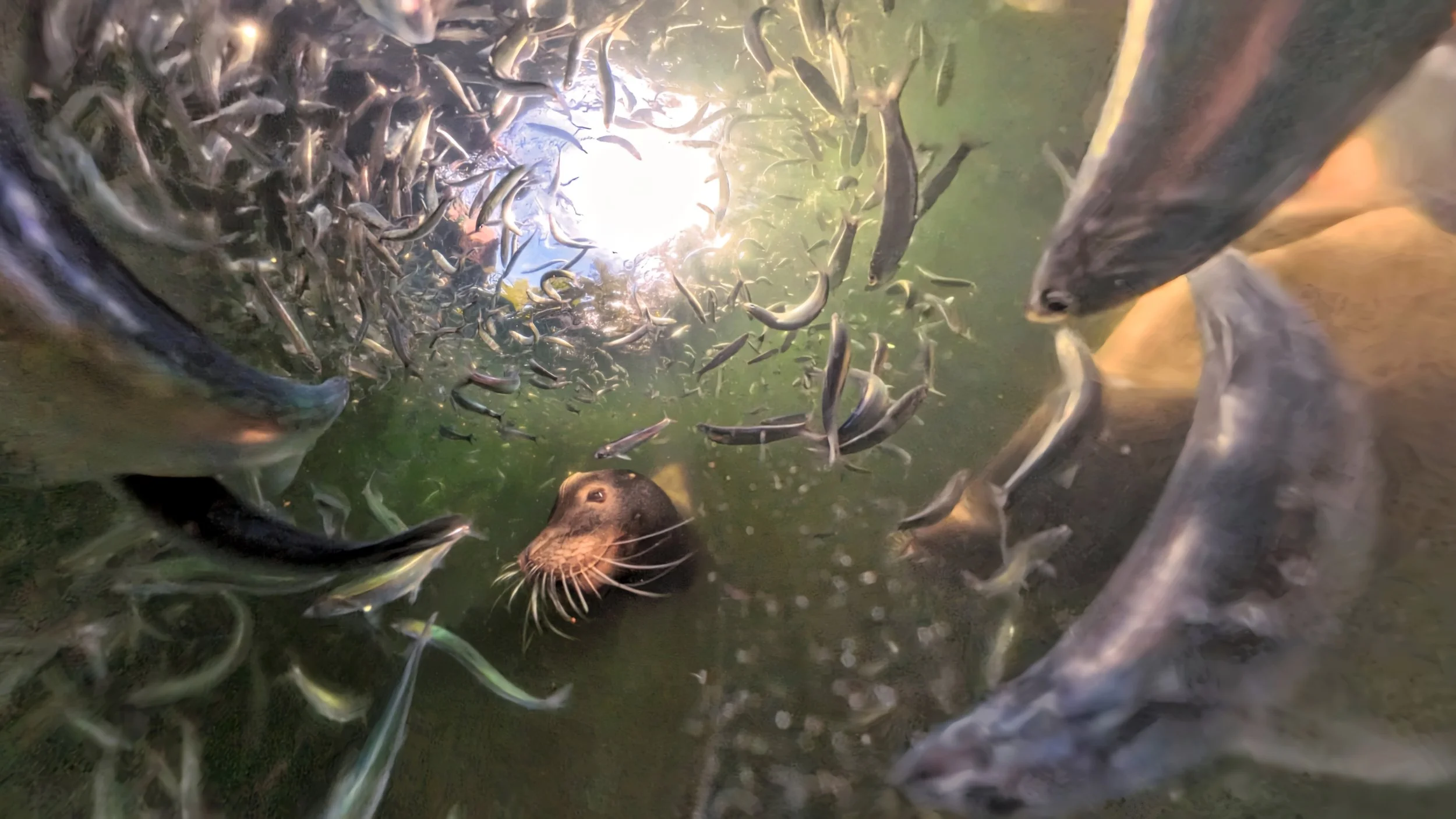
Photo Credit: Peter Mieras / www.subvisionproductions.com